

January 4, 2026
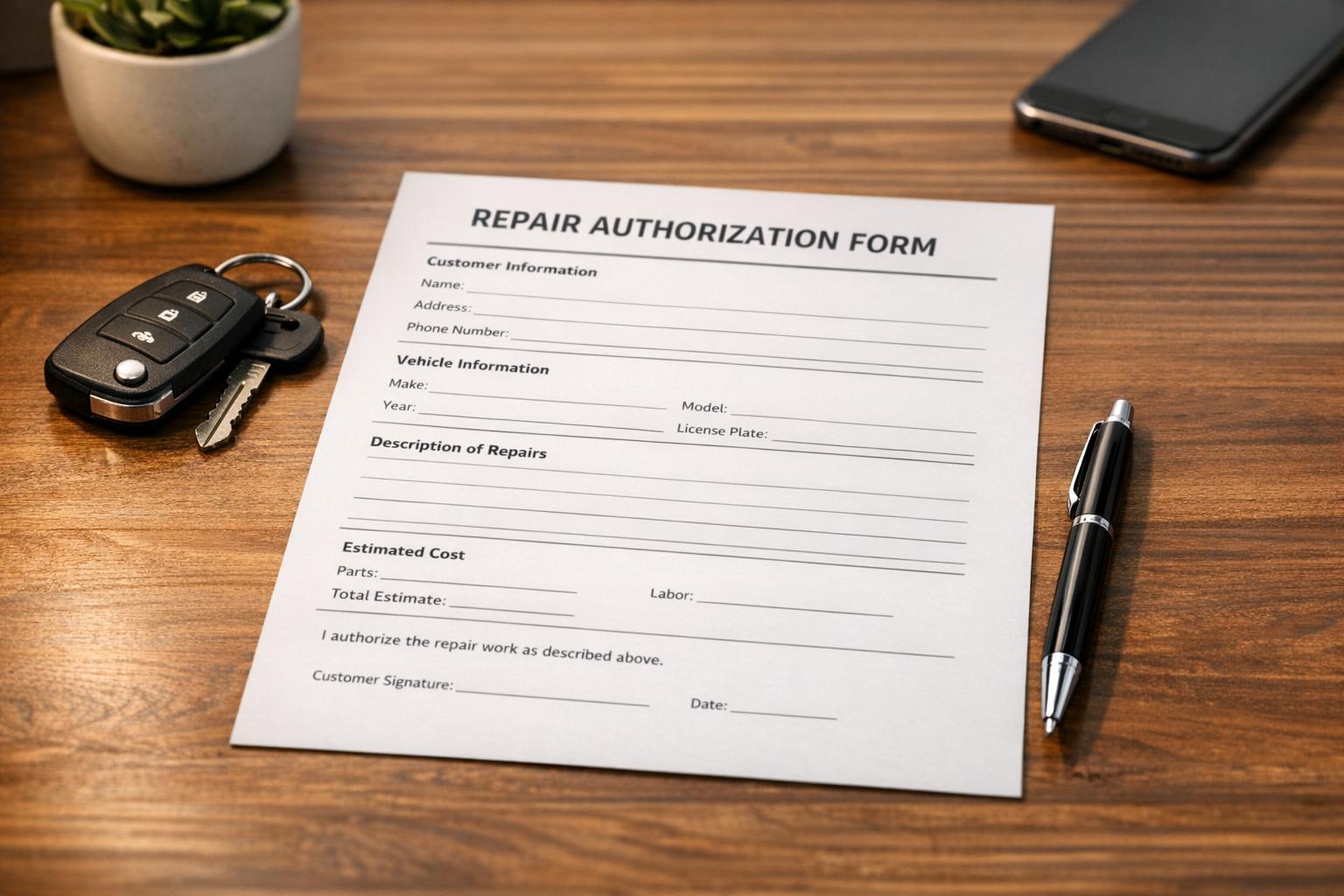
A repair authorization form is a legal document that allows a repair shop to work on your vehicle. By signing it, you give the shop permission to perform diagnostics, repairs, and even subcontracted tasks like glass replacement. It also lets employees test drive or move your car as needed. Without this form, repairs cannot legally begin.
Here’s why it matters:
Before signing, carefully review all terms, including parts usage, liability disclaimers, and payment obligations. This ensures you understand your rights and responsibilities throughout the repair process.
A repair authorization form lays out the details of approved repairs, covering everything from parts and labor to subcontracted services. This ensures you're not blindsided by unexpected charges - shops can't bill you for repairs you didn't approve. If additional damage is discovered during the process, the repair shop must get your consent before moving forward.
This form also helps avoid legal headaches by clearly defining responsibilities. For example, it might specify rules about personal belongings left in the vehicle or damages caused by natural events. Provisions like mandatory arbitration clauses and mechanic's lien details add another layer of protection for both you and the repair shop. These measures create a smoother path for dealing with insurance companies as well.
Beyond transparency and legal clarity, these forms play a vital role in simplifying insurance claims. Authorization clauses in the form allow the repair shop to manage insurance communication on your behalf. A "Limited Power of Attorney" clause, for instance, empowers the shop to negotiate repair costs directly with your insurer and even endorse checks or drafts for you. At Red River Collision Center, this provision helps speed up claims and ensures repairs get underway without delays. Plus, with modern estimating tools, any extra costs that come up can be quickly addressed.
What's Included in a Repair Authorization Form: Essential Components
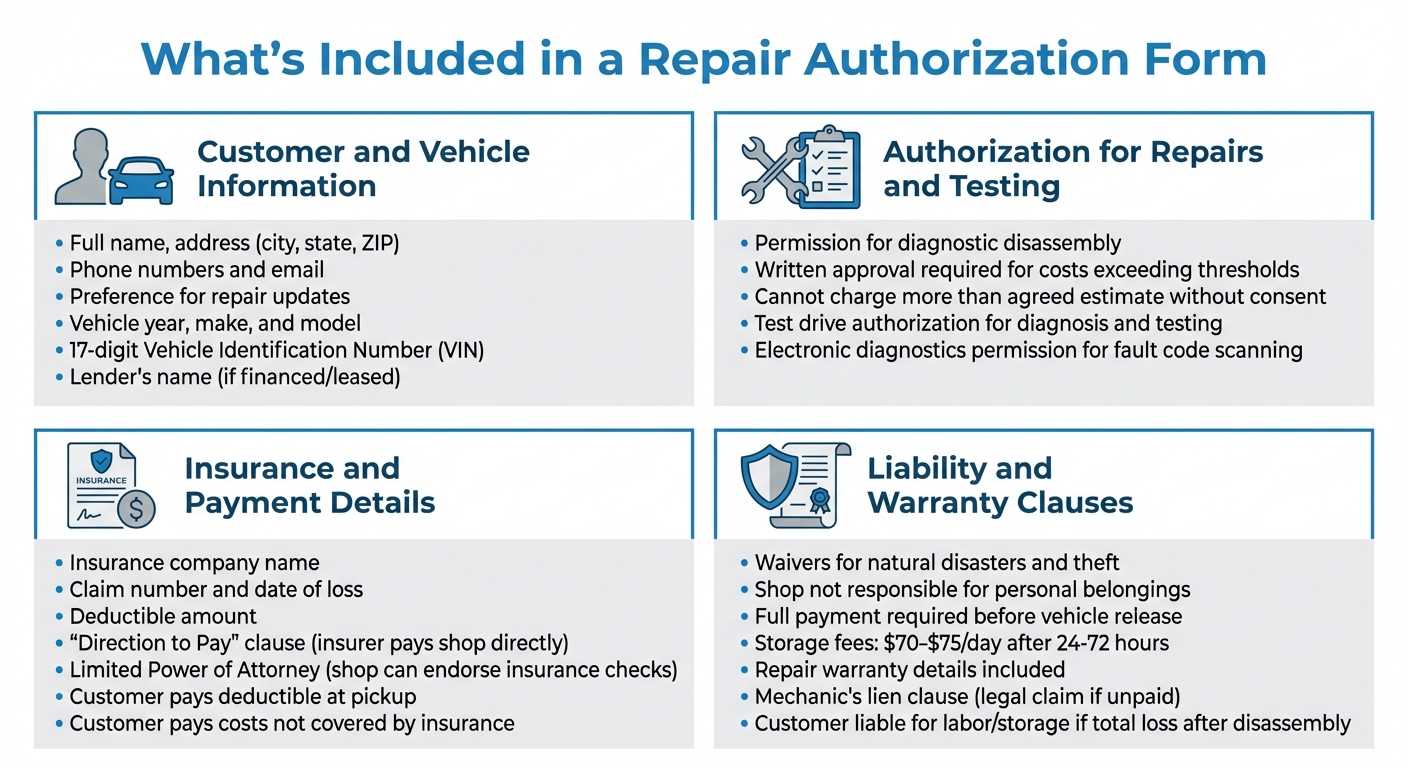
A repair authorization form starts by gathering key details about both the customer and their vehicle. You'll need to provide your full name, address (including city, state, and ZIP code), primary contact information like phone numbers and email, and whether you want updates on the repair process.
For the vehicle, the form asks for specifics such as the year, make, and model. This ensures the shop orders the correct parts and follows the right repair procedures. One critical piece of information is the 17-digit Vehicle Identification Number (VIN). The VIN allows the shop to access manufacturer-specific repair guidelines and run diagnostic scans. Double-check that the VIN is accurate to avoid unnecessary delays. If your car is financed or leased, you'll also need to include your lender's name, as their endorsement may be required for insurance payments.
Once these details are recorded, the form secures your permission to proceed with the repairs.
By signing the form, you give the repair shop legal permission to start work on your vehicle. This includes diagnostic disassembly, which lets technicians take apart components to uncover hidden damage. Shops are required to get written approval for repairs that exceed certain cost thresholds and cannot charge more than the agreed estimate without additional consent from you.
The form often includes a clause allowing technicians to test drive your vehicle for diagnosis, testing, and inspections. Some modern forms also grant permission for electronic diagnostics, enabling the shop to scan for fault codes and access repair databases provided by the vehicle's manufacturer.
You'll need to provide your insurance information, including the insurer's name, claim number, date of loss, and your deductible amount. Many forms include a "Direction to Pay" clause, which authorizes your insurer to send payments directly to the repair shop.
A Limited Power of Attorney provision may also be included. This allows the shop to endorse insurance checks and apply them toward your repair costs. While insurance often covers most expenses, you'll still be responsible for paying your deductible at pickup, along with any costs not covered by your policy. For example, you may need to pay the difference if you opt for original equipment manufacturer (OEM) parts instead of aftermarket alternatives.
The form also outlines liability and warranty terms to ensure clarity for both you and the repair shop.
To protect both parties, the form typically includes waivers for unforeseen events like natural disasters or theft. It also clarifies that the shop is not responsible for personal belongings left in your vehicle, such as sunglasses, cash, or electronics.
Full payment is required before your car can be released. If you fail to pick up your vehicle within a designated timeframe - usually 24 to 72 hours after repairs are complete - you may be charged daily storage fees, which typically range from $70.00 to $75.00. The form may also include details about repair warranties and a mechanic's lien clause, which gives the shop a legal claim to your vehicle if you fail to pay. Additionally, if your car is declared a total loss after disassembly, you could still be responsible for covering the labor, storage, and diagnostics performed up to that point.
Before you sign anything, take the time to carefully read and understand every term in the repair authorization form. This document is legally binding, and skipping over the details could lead to unexpected expenses. For instance, if you choose not to proceed with repairs after your vehicle has been disassembled for a diagnostic estimate, you might still be charged for teardown and reassembly at the shop’s standard hourly rate.
Pay close attention to liability disclaimers. Many forms state that repair facilities are not responsible for personal items left in your vehicle. One example reads:
"I agree to remove all valuables and personal property from the vehicle. I understand that Red River Collision Center and its employees will NOT be held responsible for loss or theft of any personal property left in the vehicle."
Another critical area to review is the section on parts usage. Some forms allow the use of "Like Kind and Quality" (LKQ) or aftermarket parts instead of original equipment manufacturer (OEM) parts. If you prefer OEM parts to maintain your manufacturer's warranty, make sure to specify this in writing before signing. Also, check for clauses requiring mandatory arbitration, which means disputes must be resolved through a private arbitrator rather than in court.
Once you’ve signed the repair authorization form, fulfilling your responsibilities becomes key. First, you’ll need to pay for all authorized repairs before you can pick up your vehicle. According to Illinois law:
"If you have authorized a repair... you are required to pay for the costs of the repair prior to taking the vehicle from the premises."
This payment typically includes your insurance deductible and any costs not covered by your policy.
Timely pickup is also crucial. Many shops start charging storage fees after a grace period, and if your vehicle isn’t retrieved within 30 days, it could be classified as abandoned and sold.
If you want to keep any of the old parts - like a replaced bumper or headlight - be sure to request them when you sign the form. Most shops won’t save replaced parts unless you ask upfront. Understanding every detail of what you’re agreeing to is essential to avoid surprises later.
Repair authorization forms play a crucial role in establishing transparency and trust between you and your collision repair provider. These forms clearly outline the scope of work, payment terms, and responsibilities, ensuring both parties are aligned. From the initial diagnostics to the final repairs, having clear authorization helps the entire process run more smoothly. It also sets realistic expectations about the repair timeline, potential delays (like waiting for parts), and how updates will be communicated.
By securing legal consent and operational clarity from the start, these forms help prevent misunderstandings or disputes. They protect both you and the repair shop by documenting essential details - such as liability boundaries and warranty terms - so everyone knows exactly what to expect before any work begins.
Clear communication is just the first step; choosing a reputable repair center is equally important. For example, Red River Collision Center in Bossier City, LA, ensures transparency by using detailed authorization forms with every customer. Their professional collision repair services - ranging from paintless dent repair to custom car painting and certified auto body repairs meeting OEM standards - are backed by thorough documentation designed to safeguard your interests.
When you work with a facility that prioritizes proper documentation, you're more likely to experience high-quality service with minimal surprises. A repair authorization form isn't just a formality - it’s a sign that your provider values transparency and is committed to delivering excellent results.
Before you sign a repair authorization form, take a close look at the written estimate. Make sure it covers all the necessary repairs and outlines any potential extra costs, like additional parts or labor. Ask whether the shop will use OEM (original equipment manufacturer) parts or aftermarket parts, and get clarity on their warranty policy.
Be sure to remove all personal items from your car before dropping it off. Also, confirm the shop’s liability in case of loss or damage to your belongings. Double-check for any extra fees, lien terms, or special conditions tied to the repair process. Finally, sort out how insurance payments will be managed and understand your payment responsibilities upfront to avoid any surprises down the road.
A repair authorization form streamlines the insurance claim process by granting the repair shop written approval to begin work and coordinate directly with your insurance provider. This helps cut down on the paperwork you need to handle and accelerates approvals, allowing repairs to get underway without unnecessary delays.
When you sign this form, you also permit the shop to receive payment directly from your insurance company. This makes the entire process more seamless and hassle-free for all parties.
If you don’t collect your car soon after the repairs are finished, the repair shop might charge you storage fees. These fees differ based on the shop’s policies, so it’s smart to check the details in your repair authorization form. Waiting too long to pick up your vehicle could also create problems with insurance claims or warranties tied to the repairs. To steer clear of extra costs or complications, it’s best to plan for pickup as soon as the work is complete.
